Scientific reports on the salmon smolting success for salmon making their way out into the Bay , when acidified aluminum-rich waters. lurk at the river mouthWhile overfishing and predation of adult salmon reduce salmon numbers, much concern is focused on challenges to successful transition from a freshwater existence to a saltwater existence. Failures at that stage, from even brief exposures to acidified water rich with dissolved aluminum, can be lethal, as noted below.
""The hypothesis is that sublethally stressed
smolts will have reduced smolt-to-adult survival in the marine environment as a result of inhibited enzyme
activities (important for maintaining physiological homeostasis in seawater), reduced growth, effects on
migratory behaviour and impacts on predator avoidance (Finstad & Jonsson, 2001).
 Mark Renkawitz
 Timothy Sheehan
 Graham Goulette
Excerpt: " We implanted 26 salmon smolts with ultrasonic depth tags, .....During daylight in the bay, greater than 95% of the detections occurred in water depths of 5 m or less, but depths to 37 m were recorded. At night, 99% of the detections were in the top 5 m of the water column and maximum depth was 9 m."
released earlier in the smolt ru
Effects of Acid Water and Aluminum on Parr–Smolt Transformation and Seawater Tolerance in Atlantic Salmon, Salmo salar. Abstract only Magne Staurnes, , Per Blix, and , Ola B. Reite 11 April 2011.Abstr abt excerpt "Sensitivity to low pH or low pH/Al exposure greatly increased when fish had developed to seawater tolerant smolts."
J Fish Biol. 2012 July A critical life stage of the Atlantic salmon Salmo salar: behaviour and survival during the smolt and initial post-smolt migration. Abstract only
Excerpt "The an Salmo salar involves long migrations to novel environments and challenging physiological transformations when moving between salt-free and salt-rich water...Development of management actions to increase survival and fitness at the smolt and post-smolt stages is crucial to re-establish or conserve wild populations."
Aquat Toxicol. 2010 May 5 "Effects of acidic water and aluminum exposure on gill Na(+), K(+)-ATPase alpha-subunit isoforms, enzyme activity, physiology and return rates in Atlantic salmon (Salmo salar L.). Abstract only
Excerpt: Adult return rates to the Imsa river were significantly reduced both in short-term (78% of controls) and long-term (55% of controls) acid/Al exposures, emphasising the physiological and ecological consequences of acid/Al exposure during smoltification.
Aquat Toxicol. 2008 Jan 31; Impacts of short-term acid and aluminum exposure onAtlantic salmon (Salmo salar) physiology: a direct comparison of parr and smolts. Abstract only
Excerpt: "Our results indicate that smolts are more sensitive than parr to short-term acid/Al. Increased sensitivity of smolts appears to be independent of a reduction in gill NKA activity and greater gill Al accumulation. Instead, increased sensitivity of smolts is likely a result of both the acquisition of seawater tolerance while still in freshwater and heightened stress responsiveness in preparation for seawater entry and residence."
Aquat Toxicol. 2010 Aug 1. "Physiological, molecular, and cellular mechanisms of impaired seawater tolerance following exposure of Atlantic salmon, Salmo salar, smolts to acid and aluminum." Abstract only
Excerpt "We propose that when smolts are exposed to acid and moderate to high Al concentrations, impaired seawater tolerance results from extensive gill Al accumulation, damage to the epithelium, reduced MRC and transport protein abundance, and a synergistic stimulation of apoptosis in the gill upon seawater exposure."
OTHER
Excerpt: Factors affecting mortality during the smolt and post-smolt stages contribute to determine the abundance of spawner returns. With many S. salar populations in decline, increased mortality at these stages may considerably contribute to limit S. salar production, and the consequences of human-induced mortality at this stage may be severe. Development of management actions to increase survival and fitness at the smolt and post-smolt stages is crucial to re-establish or conserve wild populations
The Effects of Some Metals in Acidified Waters on Aquatic Organisms Oceanography & Fisheries September 25, 2017 Full
Excerpt how acidification of oceans, seas and rivers exacerbates the mobilization of metals
into water bodies and how the acidic waters (low pH) have contributed to changing the metallic states into more lethal forms of metals - the metallic ions.GABAergic anxiolytic drug in water increases migration behaviour in salmon. Full
Excerpt: Although migration dynamics are extensively studied, the potential effects of environmental contaminants on migratory physiology are poorly understood. In this study we show that an anxiolytic drug in water can promote downward migratory behaviour of Atlantic salmon (Salmo salar) in both laboratory setting and in a natural river tributary.
=======================================
We're interested in this research - could you provide the full-text for it?
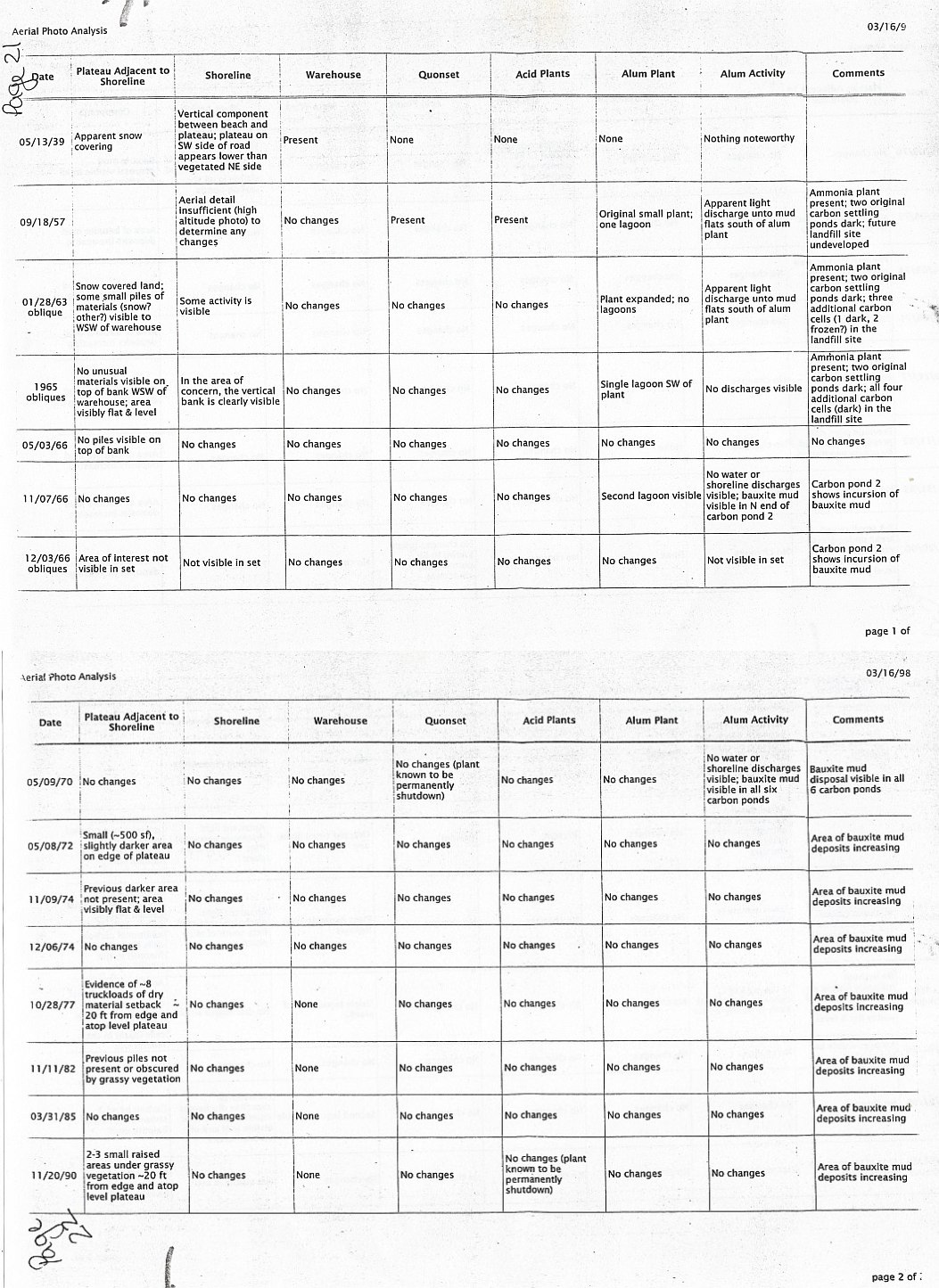
We have a problem site near the mouth of a river where a now demolished alum and superphosphate fertilizer production facility and the abandoned sulfuric acid plant that supplied from the 1940s to the early 1970s has leached acidified dissolved aluminum waste into the brackish water for decades We'd like to explore whether the frequent plumes of the waste , visible from the air, has been a player in reduced salmon smolt success. We want to learn more about the problem - your Article will be very helpful we believe. Ron Huber, , Friends of Penobscot Bay, a Waterkeeper affiliate